AI Agent Pricing Models Explained: What Vendors Charge
AI agent pricing models explained with real numbers from Salesforce Agentforce, Intercom's Fin AI Agent, and Anthropic's Claude API pricing pages.
6 min read
Learn how to deploy an AI agent: pick an execution pattern, choose a host, and launch safely, with real examples from LangGraph, AWS, Google Cloud and Salesforce.
A working prototype and a production agent are not the same thing. The prototype runs in a notebook or a terminal, answers to one person, and restarts whenever something breaks. A production agent has to stay up, answer many people at once, call tools without crashing the whole system, and recover cleanly when a dependency fails. Knowing how to deploy an AI agent means choosing the pieces that turn the first into the second.
Deploying an AI agent means moving a tested agent out of local development and into a runtime that stays available, serves multiple users, and calls external tools safely. The core steps are: pick an execution pattern (stateless, stateful or event-driven), choose where it runs (a serverless function, a container platform, or a managed agent runtime), connect data and tools under clear permissions, then roll it out behind monitoring and access controls.
Before deployment, have in place:
The execution pattern decides most of what comes after it, so pick it before touching infrastructure. MachineLearningMastery's roadmap for production agent deployment describes three patterns that cover most production agents:
Most production systems mix patterns: stateless agents for quick lookups, stateful agents for ongoing conversations, event-driven agents for the slower multi-system jobs.
Once the pattern is set, choose the compute layer. The same roadmap lists the usual options: serverless functions such as AWS Lambda or Google Cloud Run for stateless agents with unpredictable traffic, containerized deployments such as ECS or Kubernetes for stateful agents that need a consistent environment, and dedicated VMs for high-volume agents that can't tolerate cold starts.
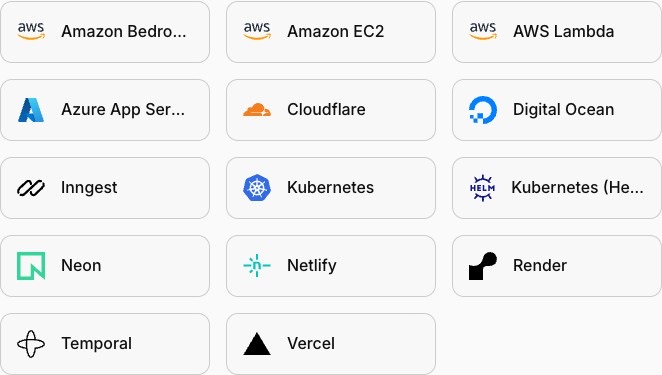
Agent frameworks increasingly ship their own deployment targets instead of leaving this entirely to generic cloud infrastructure. Mastra's deployment docs list built-in deployers for Vercel, Netlify and Cloudflare, plus integration guides for Amazon Bedrock AgentCore, Amazon EC2, AWS Lambda, Azure App Services, DigitalOcean, Kubernetes (with a Helm chart), Render, Temporal and Neon. A Mastra application can also run as a standalone server, built with mastra build and deployed to any VM, container or PaaS platform.
A managed runtime trades some control for a faster path to production, and most major vendors now offer one built specifically for agents.
langgraph-sdk client or plain REST.adk deploy command. Google's 6 November 2025 Vertex AI Agent Builder update adds observability and evaluation features to Agent Engine, a plugins framework for custom logic, and says ADK has been downloaded over 7 million times.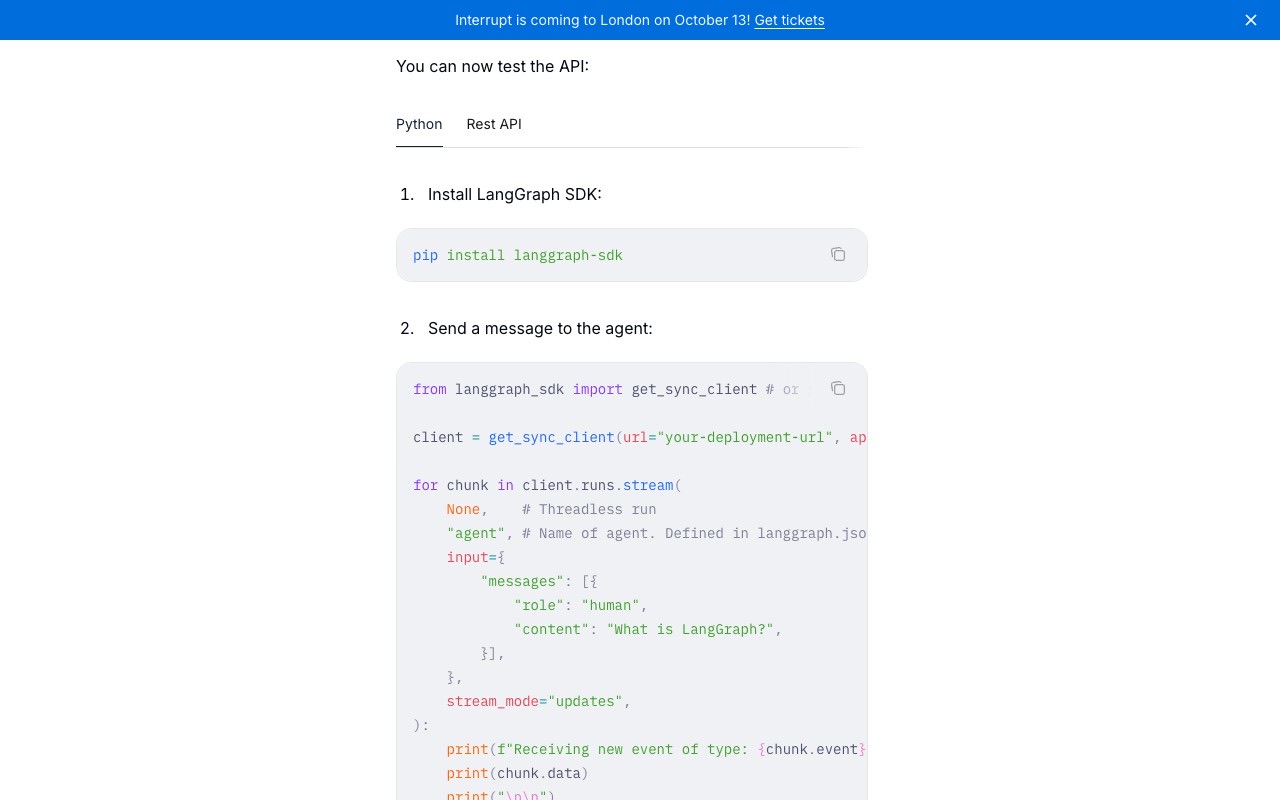
An agent is only useful once it can reach real systems, and that's also where most of the risk shows up. IBM's deployment guide breaks this into integration and security work that happens side by side:
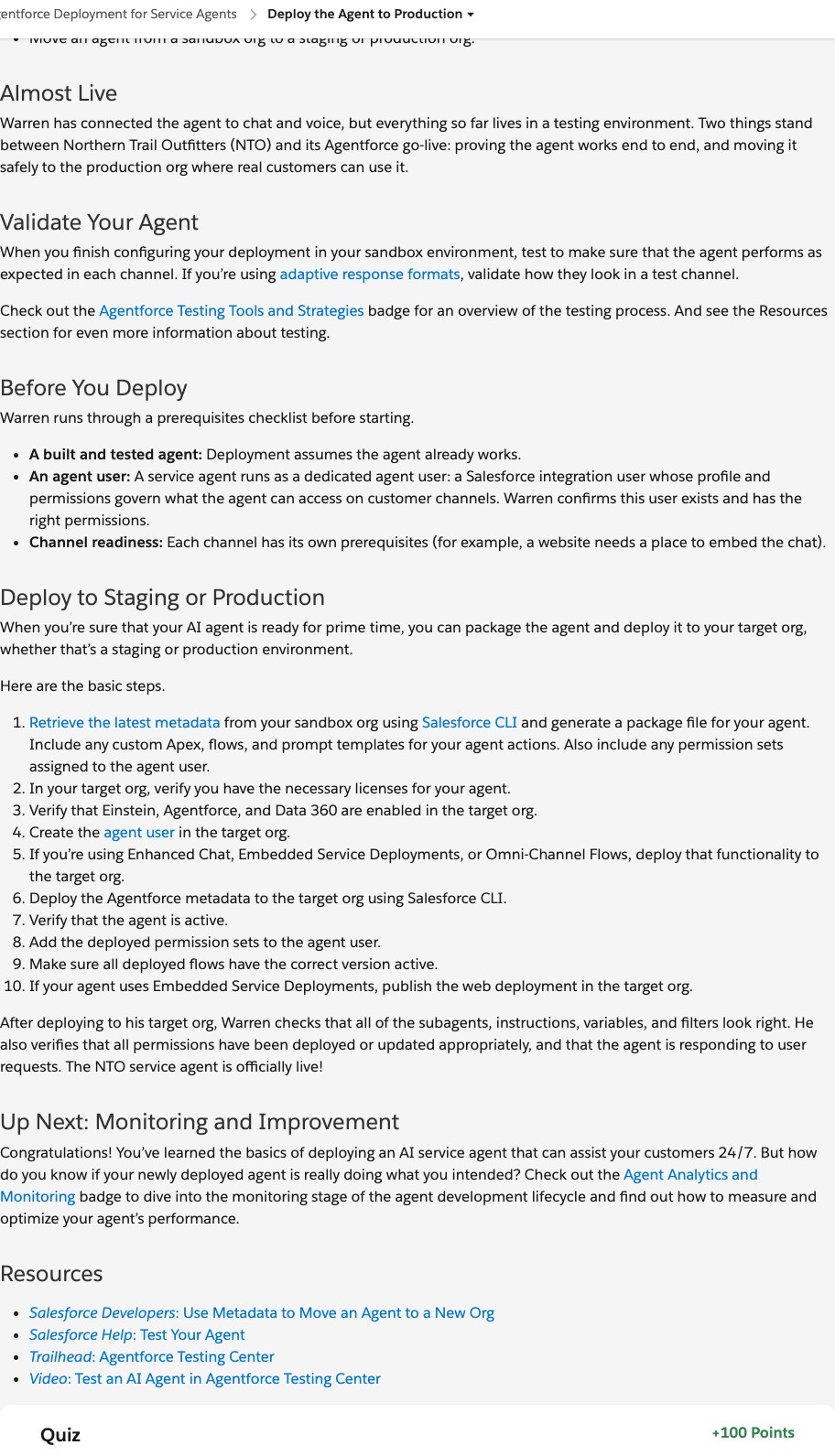
Validate in staging before anything reaches production users. Salesforce's own deployment module makes this the first checklist item: test the agent in every channel it will use, then confirm an agent user with the right permissions exists before moving metadata to a target org. Its ten-step checklist covers metadata retrieval, license checks, the agent user, and verifying permissions and flow versions after deploy.
Once live, IBM's guide treats deployment as ongoing: track reliability, accuracy and user interactions, then use that monitoring to improve the agent over time rather than treating launch as the finish line. Tools built for this include LangSmith and Langfuse for tracing agent runs, alongside whatever logging the hosting platform already provides.
adk deploy) from ADK to Agent Engine, new observability and evaluation tooling in Agent Engine, a Go SDK for ADK alongside Python and Java, and native agent identities for governance.An agent typically needs to hold more state across a conversation, call external tools with its own permissions, and recover from a failed tool call or model timeout without crashing the whole request. A stateless agent can be deployed much like a regular API; a stateful or event-driven agent needs the extra infrastructure IBM and MachineLearningMastery both describe, such as session storage and message queues.
No. Kubernetes suits stateful agents that need a consistent, long-running environment at scale, but serverless platforms like AWS Lambda or Google Cloud Run work for stateless agents with unpredictable traffic, and frameworks such as Mastra and LangGraph also offer their own managed or serverless deployment targets.
Yes. An agent can run on any compute layer that hosts a long-running process or responds to HTTP requests, which is why Mastra documents deployers for generic platforms like Vercel, Netlify, Cloudflare, EC2 and plain Kubernetes alongside its managed options.
IBM's deployment guide recommends giving the agent its own authenticated identity separate from the user it serves, applying role-based access to what it can read or do, adding guardrails against prohibited actions, and monitoring for prompt injection attempts that try to manipulate its behavior through malicious instructions.
It depends on what you already built with. Teams using LangGraph have LangSmith Cloud, Google's ADK agents deploy to Vertex AI Agent Engine with one command, Mastra apps can target a wide range of cloud providers, and Salesforce's Agentforce is built specifically for packaged service agents inside a Salesforce org.
Browse the frameworks and the MCP servers they connect to on aiagentslisting.com before deciding which one to deploy.
One email a week. New agents, MCP servers and skills, and what is actually getting traction.
AI agent pricing models explained with real numbers from Salesforce Agentforce, Intercom's Fin AI Agent, and Anthropic's Claude API pricing pages.
6 min read
MCP vs Agent Skills, compared on how each connects an AI agent to the outside world: MCP as a client-server protocol for live tools, Agent Skills as local Markdown instructions.
7 min read
Vertical AI agents work inside one industry instead of many. See how they're built, real production examples, and when to choose one over a general agent.
7 min read