MCP vs A2A: How the Two Agent Protocols Differ
MCP vs A2A explained: MCP links one agent to its own tools, A2A links separate agents to each other, and most production systems now use both.
7 min read
A comparison of seven no-code AI agents platforms in 2026, covering pricing, integrations and best use case for n8n, Zapier, Lindy, Relevance AI, Voiceflow, Gumloop and Botpress.
Seven years ago "no-code" meant drag-and-drop web pages. In 2026 it means describing a task in plain English and watching a platform wire together the triggers, the language model calls and the app connections that used to take a developer a sprint to build. The tools below range from visual automation builders with an AI node bolted on to platforms built around the agent from day one.
No-code AI agents are platforms that let someone build an AI-powered worker, one that reads email, updates a CRM or answers support tickets, by connecting prebuilt blocks and plain-English instructions instead of writing code. They typically bundle a workflow or chat builder, a library of app integrations, and a hosted language model so nothing needs to be deployed separately.
| Platform | What it is | Best for | Starting price |
|---|---|---|---|
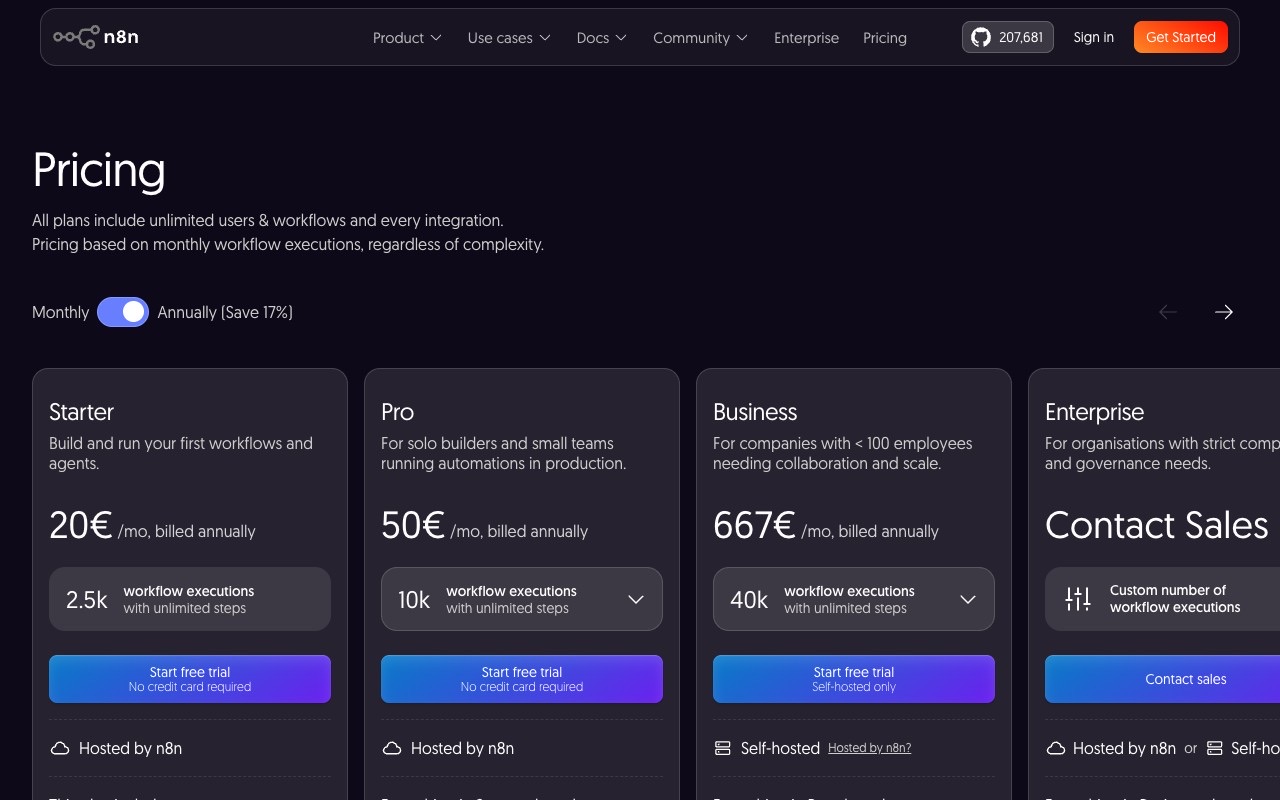
| n8n | Visual workflow automation with an AI Agent node and optional code steps | Technical teams who want self-hosting and full control | 20 euros/month billed annually, 2,500 workflow executions |
| Zapier Agents | Natural-language agent builder inside Zapier's automation platform | Teams already on Zapier who want agents across thousands of connected apps | Free tier, paid plans built around task volume |
| Lindy | Slack-native "AI teammate" with scheduled routines and 40+ built-in skills | Ops, support and marketing teams who want an assistant in Slack | $49.99/month per seat for 5,000 shared credits |
| Relevance AI | Enterprise "AI workforce" builder for specialist, decision-making agents | Companies standing up many coordinated agents across sales, support and ops | Enterprise only, custom quote |
| Voiceflow | Conversational AI platform for chat and voice customer support agents | CX teams building customer-facing chat or voice agents | Custom quote, usage-based billing |
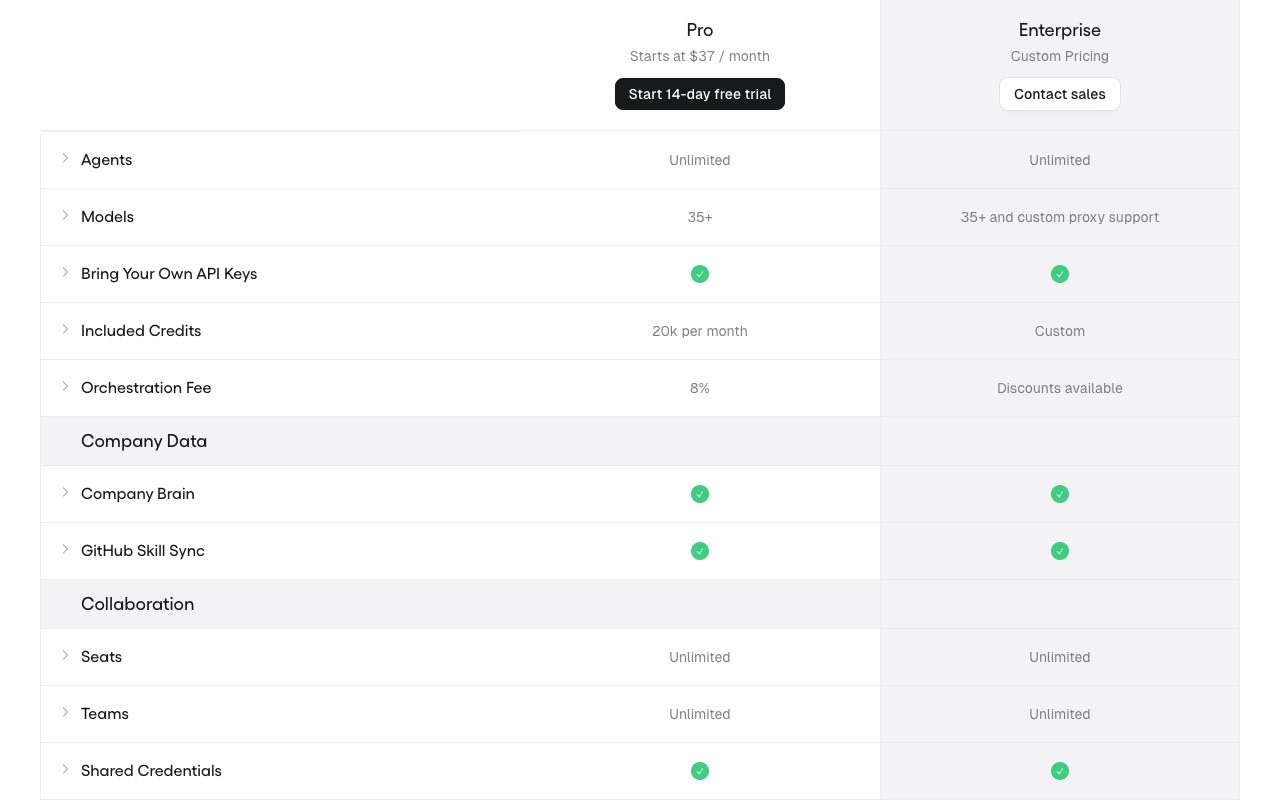
| Gumloop | Agent builder with a real browser the agent can log into and click through | Teams that need agents to use websites without an API | $37/month, 20,000 credits included, 8% orchestration fee |
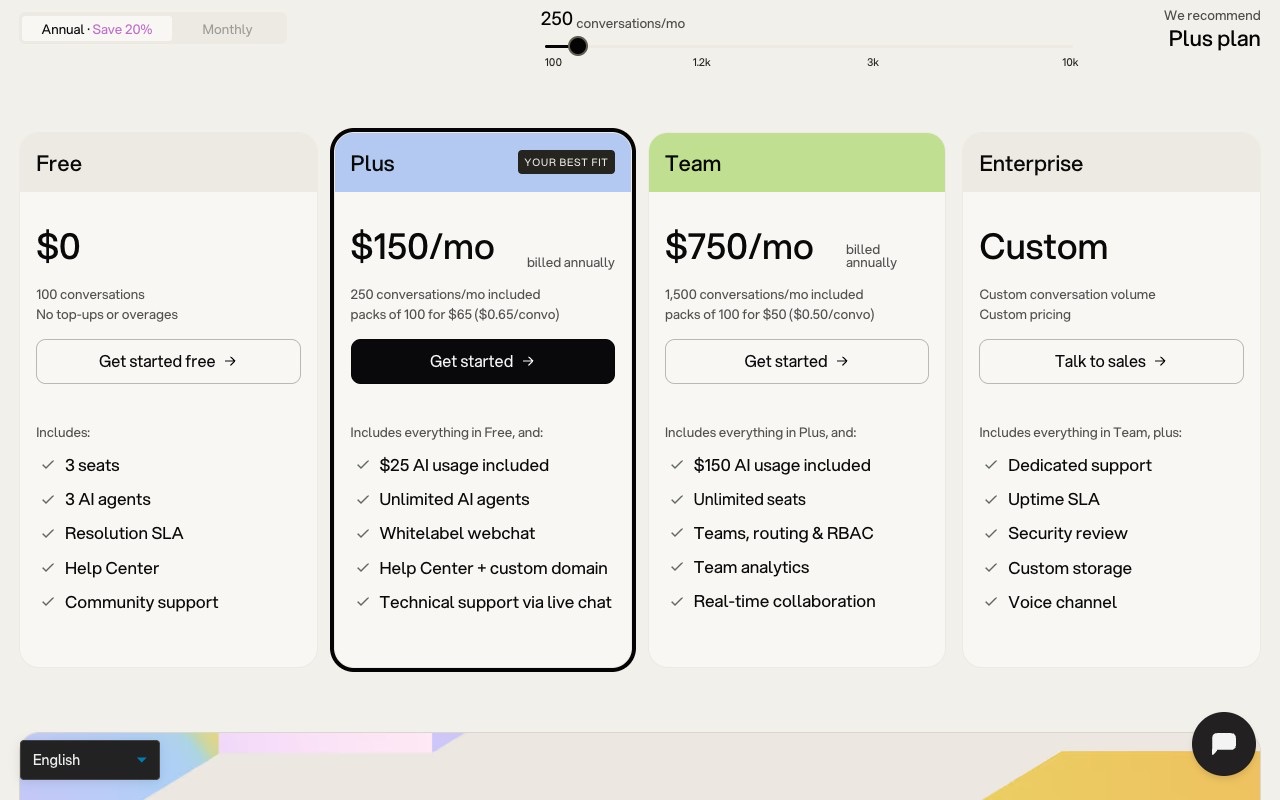
| Botpress | AI-native customer support platform priced per conversation | Support teams who want no per-seat cost | Free for 100 conversations/month; $150/month for 250 |
n8n is an open-source workflow automation platform that added an AI Agent node, letting any workflow call a language model, hold memory and call other workflows or MCP servers as tools, according to its AI agents product page. Workflows are built by connecting nodes on a canvas, and a workflow can drop into a JavaScript or Python code step when the visual builder runs out of road, so it sits closer to low-code than pure no-code.
The platform reports more than 500 pre-built integration nodes and over 600 community-built AI agent workflow templates on its site. Pricing on the official pricing page starts at 20 euros a month billed annually for the Starter plan, which includes 2,500 workflow executions, the AI Agent node, MCP client and server trigger support, and 1,600 monthly Assistant credits. The Pro plan runs 50 euros a month for 10,000 executions, and the self-hosted Business plan is 667 euros a month for 40,000 executions with SSO and Git-based version control. n8n bills by the execution, meaning one full workflow run regardless of how many steps it contains, rather than per step the way some competitors do.
Zapier Agents lets a user describe a task in plain English and the platform assembles the multi-step workflow, pulling live data from whichever of its thousands of connected apps the task needs, per Zapier's Agents product page. Prebuilt templates on the page cover tasks like lead qualification, sales prep briefs and GitHub pull request notifications to Slack.
A hands-on test of the product by DesignRush found Zapier Agents easy to spin up from a plain-English description, with built-in memory and context handling across steps, though the reviewer noted agents occasionally misinterpret vague instructions and logic customization is more limited than a dedicated workflow builder like n8n. DesignRush reported a free tier and a Pro plan at $50 a month with an Advanced tier at custom pricing; Zapier's own agents pricing page describes task-based billing without listing current flat figures.
Lindy frames itself as an "AI teammate" rather than a workflow tool: it connects to a company's existing apps, including Slack, Gmail, Notion and GitHub, and can be assigned roles like account manager, SEO specialist or recruiter, according to its homepage. It ships with more than 40 built-in skills, persistent workspace context and MCP support for connecting any additional tool.
Lindy's pricing page runs entirely on shared credits rather than flat seats: the Free tier gives $50 in credits that expire after seven days, and the Team tier starts at $49.99 a month for 5,000 credits, billed per active seat, with every seat's credits pooled for the whole workspace. Credit bundles scale up to 1,750,000 credits for $9,999.50 a month. A simple lookup might cost 2 to 250 credits, while a complex build like a multi-source dashboard can run 1,000 to 2,500 credits, per the pricing page's own usage tiers. Anything with outside impact, such as sending an email or publishing a document, waits for human approval by default.
Relevance AI positions itself around "specialist" agents for sales, customer success, marketing and HR that reason through decision trees rather than just answering chat messages, per its homepage. Its newest product, Invent 2.0, is described as a "24/7 AI solutions engineer" that helps non-technical teams identify what to automate and build the agent for it.
Customer case studies on the site are specific: Qualified reports a $7 million pipeline generated by 35-plus agents in six months, and Send Payments reports saving 40 hours a week by going AI-first across global operations. Notably, Relevance AI's current pricing page lists only an Enterprise tier with a custom quote, unlimited agents and 2,000-plus integrations; it no longer shows the self-serve Pro, Team and Business tiers that an earlier DesignRush review priced at $19, $199 and $599 a month.
Voiceflow is built for CX teams deploying agents across chat and voice channels, with a visual Agent Studio for shaping an agent's persona and instructions and an assistant called Atlas for finding gaps in agent conversations, according to its homepage. The company reports more than 3,000 customers, 10,000-plus live agents and over 1 billion messages processed, and it was named a 2026 Best Software Award winner by G2 in the Generative AI Infrastructure category for easiest to use and highest user adoption.
Like Relevance AI, Voiceflow's pricing page no longer lists flat monthly tiers. It splits into a usage-based option for agencies and partners building for clients and a custom-quote option for businesses that requires booking a demo, a shift from the flat per-editor pricing the platform used in earlier years.
Gumloop's agents can open a real browser, sign in with saved logins, click and type on any site, and clear CAPTCHAs on their own, a feature the company calls Gumloop Browser and promotes on its homepage. When a site needs a human, such as a two-factor prompt, the agent hands the live browser session to a person and picks back up once they finish.
The Pro plan starts at $37 a month with 20,000 included credits, access to more than 35 language models, unlimited agents and seats, and an 8% orchestration fee charged on top of credit usage. Enterprise pricing is custom and adds a virtual private cloud option, org-wide connector guardrails and SCIM/SAML support.
Botpress built its AI agent studio first and added a helpdesk product, Botpress Desk, on top of it, arguing on its homepage that most AI support tools fall apart once a ticket gets complicated. The platform reports 750,000 AI agents built on it and 10 years of AI infrastructure work, with a 4.5 rating on G2.
Botpress prices by conversation rather than by seat or by resolution, a choice the company's pricing FAQ explains as more predictable than resolution-based billing and not penalizing a team for building a smarter bot. The Free plan covers 100 conversations a month with 3 seats and 3 AI agents. The Plus plan is $150 a month billed annually for 250 conversations, with extra packs of 100 conversations at $65. The Team plan is $750 a month billed annually for 1,500 conversations, with unlimited seats and packs of 100 at $50. Botpress also publishes a comparison claiming $9,000 a year for 4 seats and 1,200 monthly conversations, against a reported $29,520 a year for a similar Zendesk setup and $18,336 for Intercom.
Start from the job, not the tool. A team that needs deep logic, self-hosting, or the option to drop into custom code when the visual builder hits a wall is better served by n8n than by a chat-first teammate tool. A team that already lives inside Zapier's 8,000-plus app connections gains the most by adding Zapier Agents rather than learning a second platform. A small team that wants an assistant answering in Slack without anyone touching a workflow canvas fits Lindy's model best.
Larger organizations coordinating many agents across departments, with evaluation, governance and SSO as requirements from day one, tend to land on Relevance AI or Voiceflow, both of which have pulled their pricing behind a sales conversation rather than a self-serve signup. Teams whose agents need to operate inside tools that have no API, such as internal portals or legacy vendor sites, are the clearest case for Gumloop's browser-based agents. And a support team that wants to stop paying for seats it isn't using, with billing tied to how much work the agent actually does, is the case Botpress makes for conversation-based pricing. Several of these platforms, along with hundreds of other AI agents, are listed on AI Agents Listing for side-by-side browsing.
Reading each vendor's current pricing page turned up changes that the older reviews ranking for this keyword do not reflect. Relevance AI's and Voiceflow's public pricing pages now show only enterprise, custom-quote tiers, replacing the self-serve monthly plans that reviews from 2025 described. Botpress now bills purely by conversation count rather than by seat, a model its own pricing FAQ contrasts directly with Zendesk and Intercom's per-seat pricing. Gumloop has begun promoting Gumloop Browser, a mode that lets its agents log into websites with saved credentials and hand off to a human mid-session when a login or CAPTCHA needs a person. n8n's Starter plan, at 20 euros a month, now ships with the AI Agent node, MCP client and MCP server trigger included rather than gated to a higher tier, and Lindy's billing model remains built entirely on a shared, poolable credit system starting at $49.99 per active seat.
A no-code AI agent platform lets someone build an AI-powered worker, one that can read messages, call apps and take multi-step actions, by connecting prebuilt blocks or describing the task in plain language, without writing code. Most bundle a visual builder, a library of app integrations and a hosted language model so nothing has to be deployed separately.
n8n's core workflow builder is visual and no-code, built around dragging and connecting nodes on a canvas. It differs from the other platforms in this list by also allowing optional JavaScript or Python code steps inside a workflow, which makes it closer to low-code for teams that want that option, while remaining fully usable without ever opening a code editor.
It varies widely by billing model. n8n starts at 20 euros a month for 2,500 workflow executions, Gumloop starts at $37 a month for 20,000 credits plus an 8% orchestration fee, Lindy starts at $49.99 a month per seat for 5,000 pooled credits, and Botpress is free for 100 conversations a month before scaling to $150 a month for 250. Relevance AI and Voiceflow currently require a custom quote with no public self-serve price.
Most of these platforms connect to apps through APIs and prebuilt connectors, which means a tool with no API is out of reach. Gumloop is the exception in this list: its agents operate a real browser, including saved logins and CAPTCHA handling, so they can click through a site the way a person would even when no API exists.
Botpress and Voiceflow are both built specifically for customer support and CX use cases, with Botpress pricing by conversation volume and Voiceflow built for both chat and voice channels with analytics on resolution rates. Lindy and Zapier Agents can also handle support tasks like ticket triage as part of a broader set of roles, rather than as their primary focus.
No-code AI agents keep changing shape as platforms compete on pricing model as much as on features, and the best way to see how a specific tool stacks up against the rest of the category is to browse the live listings on AI Agents Listing.
One email a week. New agents, MCP servers and skills, and what is actually getting traction.
MCP vs A2A explained: MCP links one agent to its own tools, A2A links separate agents to each other, and most production systems now use both.
7 min read
AI releases in October 2026, checked against vendor pages: GPT-6.1 Terra, Kimi K3.1 Pro, Gemini 4 Argon, Claude Haiku 5.5 and the open-weight drops.
18 min read
MCP vs OpenAPI: MCP lets AI agents call tools at runtime, while OpenAPI describes an HTTP API ahead of time. Here is how they differ and work together.
7 min read